Most Bands Sound Good on Paper.
What three decades around live music have taught us about choosing the right band.
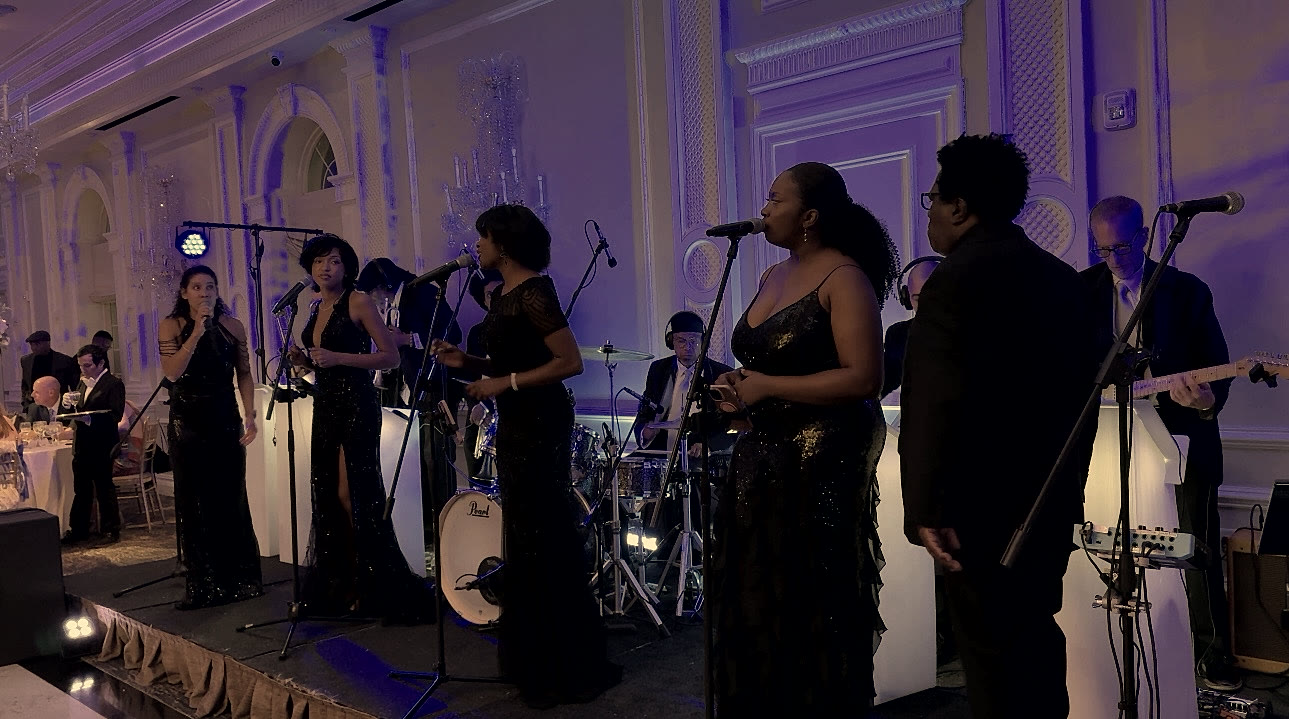
Great musicians. Extensive repertoire. Multiple vocalists. High energy. Customized music. A band that knows how to read the room.
Most band consultations sound good on paper.
And most good bands mean what they say.
The more useful question is what those things actually mean when the musicians walk onto the stage.
After more than three decades around live music, weddings, milestone celebrations and rooms of every kind, we’ve learned that some of the things that matter most are surprisingly difficult to see on a proposal.
This isn’t a list of reasons to hire a bigger band. Or even our band.
It’s a walkthrough of a few things we think are worth understanding before you choose one.
Start with the evening. Not the headcount.
Some people come to a consultation knowing exactly what they want.
A large orchestra. A full vocal front line. Horns. A stage filled with musicians.
Others simply know they want great live music.
Then come the numbers.
Six pieces. Eight. Ten. Twelve. Three vocalists. Five vocalists. Horns. Strings. Percussion.
Live music can quickly begin to look like a collection of pieces that can be added and removed one at a time.
It isn’t quite that simple.
Before counting musicians, think about the evening.
How large is the room? Who is coming? Is music a priority? Will guests want to dance all night, listen over dinner, sing with the band, or probably all three?
What does the celebration need the music to do?
That’s where we prefer to begin.
A large repertoire is good. Knowing where to go next is better.
Most experienced event bands know a great deal of music.
And, inevitably, many of us play some of the same songs. People have been filling dance floors to certain records for generations for good reason.
The distinction isn’t simply whether a band knows the songs.
It’s what happens next.
A live event rarely follows the evening exactly as it appeared on paper.
Dinner runs late. A toast runs long. The dance floor changes generations. A song everyone expected to work doesn’t. Something nobody expected suddenly becomes the moment of the night.
Years ago, we watched a capable band encounter an unusual problem. They had effectively run out of music that worked for the room.
They hadn’t run out of songs.
They had run out of somewhere to go.
That stayed with us.
A deep repertoire gives musicians choices. Musicality gives them the ability to make those choices. Leadership helps determine when to make them.
Those things are considerably harder to count than musicians. You can hear some of it in the music library.
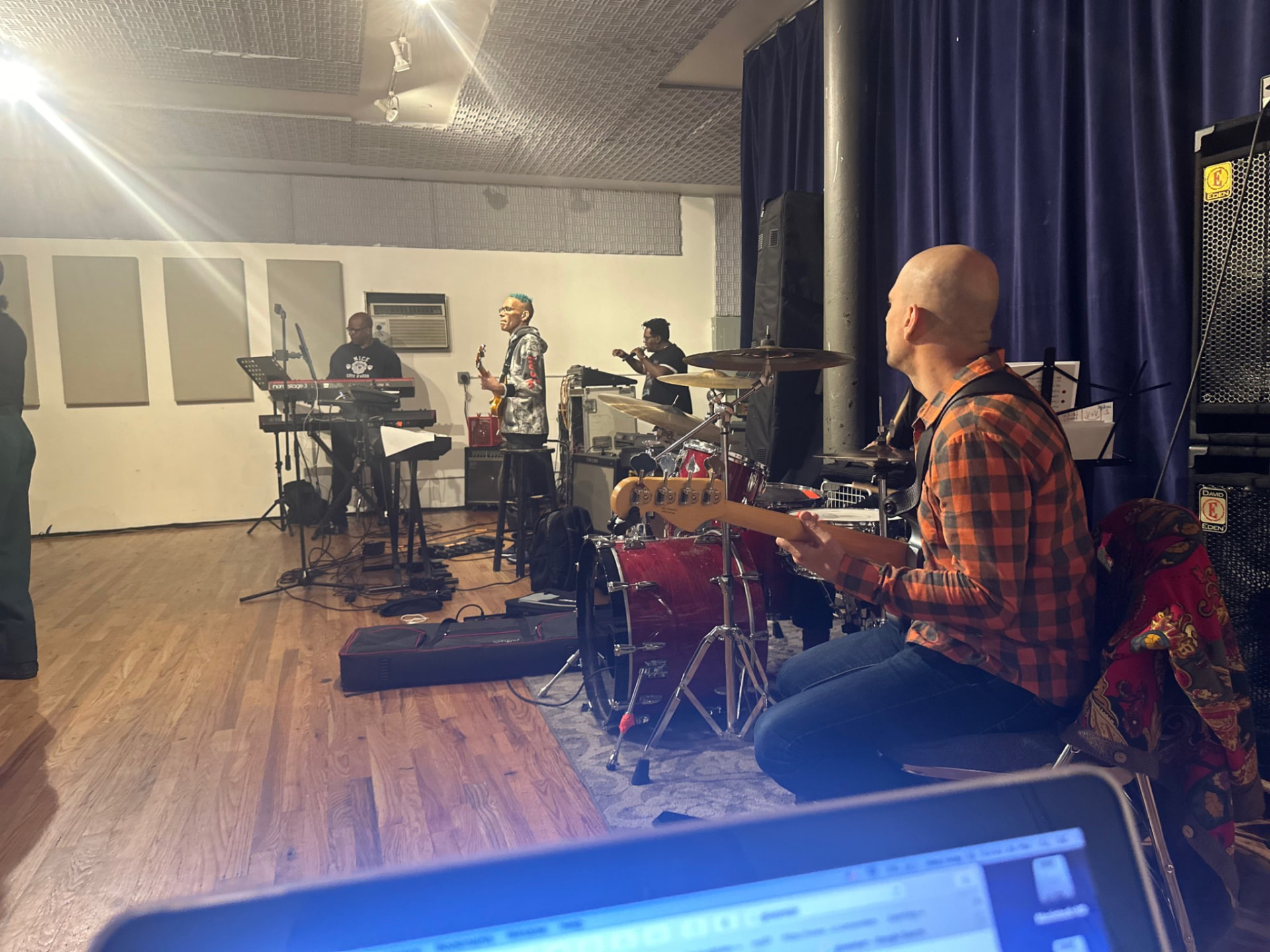
“We read the room.”
Almost every good event band says some version of this.
We do, too.
But reading a room begins with something musicians understand very well:
listening.
A room is constantly giving information.
Sometimes people want to dance. Sometimes they want to sing. Sometimes they are perfectly happy listening. Sometimes a beautiful piece of music should sit underneath a moment that belongs entirely to someone else.
And sometimes the room is ready to explode.
A band can be playing beautifully and still not be playing to the room.
Knowing the difference is part of the work.
More musicians should mean more musical possibility.
Bands are commonly sold by size.
That’s useful shorthand. It isn’t the whole story.
Every musician should have something to do.
That includes the vocalists.
If there is a large vocal front line, listen to it. Who sings lead? Who supports? Are you hearing harmonies? Do different voices allow the ensemble to move naturally between different kinds of music?
The same applies across the band.
Additional musicians should create additional texture, range, depth or possibility, not simply additional people onstage.
Headcount is not orchestration.
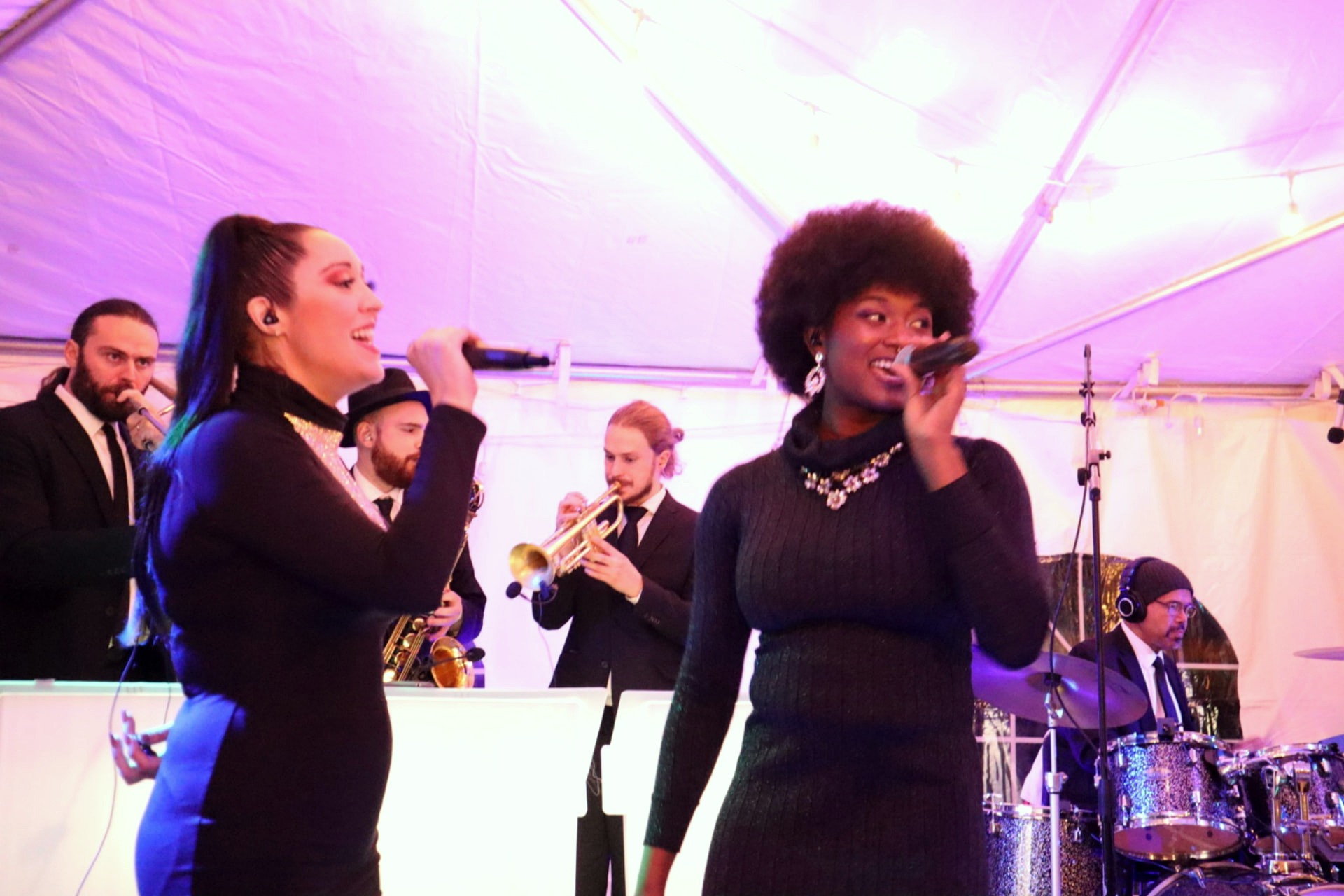
Smaller can be wonderful.
There are exceptional small bands capable of producing remarkably large sound.
For some rooms and some celebrations, that is exactly right.
But a thoughtfully designed smaller ensemble and a layered orchestra are different musical experiences.
They should be.
Does every event need an orchestra?
No.
Does every client want one?
No.
Some people prioritize music enormously. They hear the arrangements, the harmonies, the instrumentation and the difference immediately.
Others couldn’t tell you exactly what they’re hearing.
Their response matters just as much.
They simply know it feels good.
Don’t dismantle a band one musician at a time.
It is completely reasonable to discuss ensemble size.
The room may call for something different. So may the occasion or the budget.
But musicians aren’t à la carte pieces.
Remove a vocalist and a vocal arrangement may change. Change the instrumentation and certain repertoire may change with it. Alter the rhythm section and the character of the ensemble can change.
At some point, you haven’t made the same band smaller.
You’ve made a different band.
That can be excellent, too.
The important thing is that it has been designed to be excellent at the size it is.
Ask who you’re listening to.
Buyers have become increasingly knowledgeable about this question, and there is history behind it.
If particular performers are part of the reason you chose an ensemble, it is reasonable to understand who you are seeing and hearing during the buying process and how closely that represents the performers who will appear at your event.
Professional substitutions sometimes happen. Musicians are human beings.
What matters is understanding the company’s model and the standard applied when someone else needs to step into a role.
Because individual talent matters.
So does cohesion.
You’re not only hiring musicians. You’re hiring what happens when those musicians play together.
Watch the room, too.
When you’re watching live performance footage, don’t only watch the band.
Watch the people.
Watch what happens when a song ends.
Watch whether guests are leaning in, singing, dancing, listening.
Watch whether the musicians appear connected to one another and to what is happening beyond the stage.
A beautifully produced demo can tell you whether a band sounds good.
A room can tell you something different.
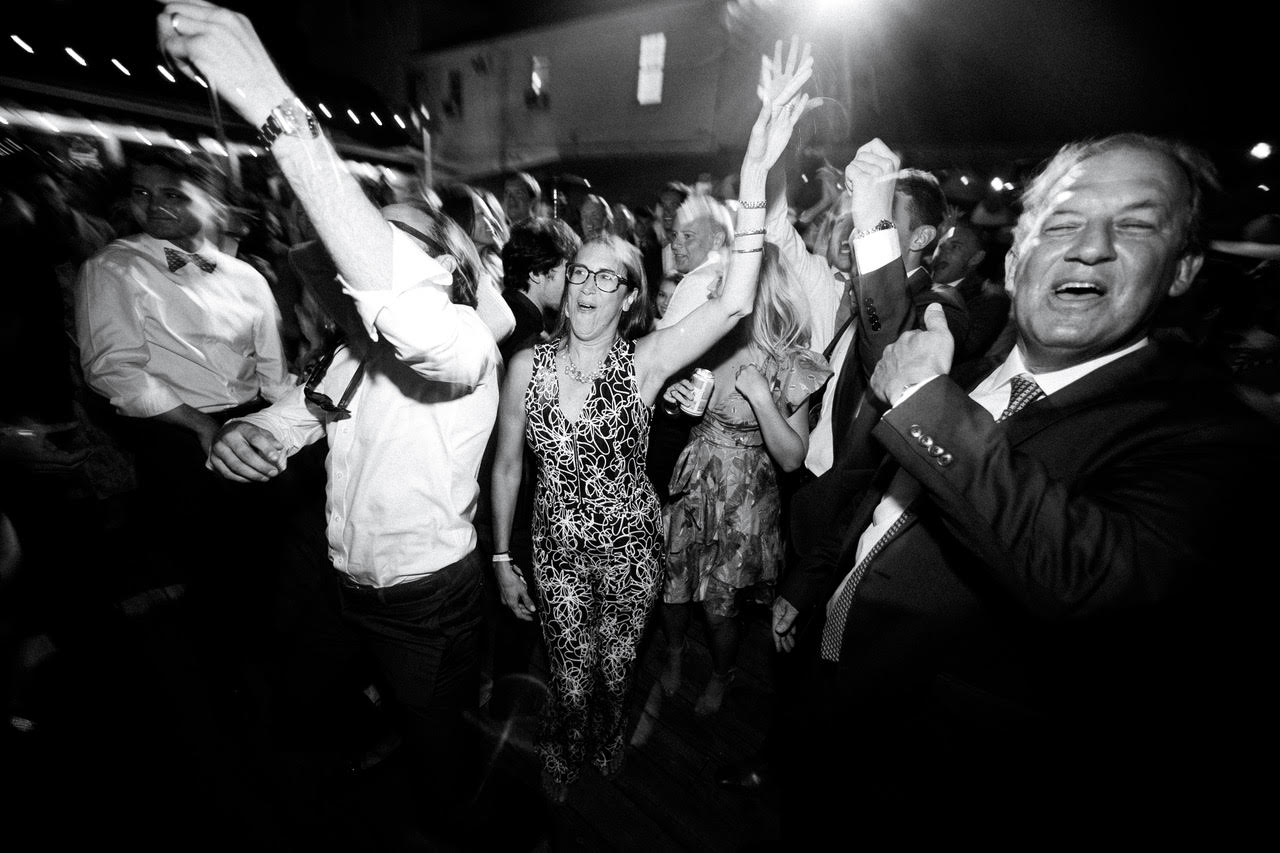
The band isn’t the only thing happening.
A celebration has its own choreography.
Caterers are serving. Photographers are working. Planners are watching the timeline. Speeches run long. Dinner moves. Guests disappear and reappear. Something happens that wasn’t on anybody’s schedule.
Live music has to exist inside all of it.
There are moments when the music should lead.
There are moments when it should follow.
And there are moments when its best contribution is simply knowing how to support what is already happening.
The performance begins before you hear it.
The hours guests see musicians performing are the visible part.
Before that may come conversations, personnel, repertoire decisions, musical preparation, production, special requests, timelines and coordination with the venue and the other professionals producing the event.
A proposal isn’t a wedding.
A wedding isn’t a milestone birthday.
A milestone birthday isn’t a gala.
And none of them are quite the same as a concert.
The musicians may be similar.
The assignment isn’t.
Understanding the assignment is part of what you are hiring.
Sometimes you hear it. Sometimes you simply feel it.
People who really know music may hear every detail.
They hear the arrangement.
They notice the rhythm section.
They hear the harmony.
They recognize when musicians are communicating without speaking.
But nobody needs musical training to experience the result.
A guest may simply remember that the entrance felt extraordinary.
That dinner felt warm.
That their parents suddenly started dancing.
That everybody sang together.
That the room changed.
That nobody wanted the evening to end.
They may never know why.
That’s fine.
Music can be central to a moment without asking to be the center of attention.
Because special moments are emotional.
Two people are getting married.
Someone is celebrating seventy years.
A family is together.
Friends who rarely find themselves in the same room have one night to share it.
The meaning already exists.
Music doesn’t need to manufacture it.
Our job is to understand what the moment needs. Sometimes that means leading it. Sometimes supporting it. Sometimes getting out of its way.
And sometimes, at exactly the right moment, letting the music take over.
That’s why we play.
- Listen beyond the demo.
- Ask who will actually perform.
- Understand what the musicians in the ensemble contribute.
- If you're considering a different ensemble size, ask what changes musically.
- Ask what happens before the performance, not only during it.
- Watch the room.
And perhaps most importantly, listen for something that isn’t written on a proposal:
Does this feel like a collection of musicians playing songs, or an ensemble that knows what to do with a room?
There is a difference.
What Does Live Music Really Cost?
Two proposals can show the same number of musicians and represent very different things.
We’ll look at what sits behind the number: musicians, preparation, production, experience, leadership and the work that happens before anyone hears the first note.
Editorial content © Gordon Dukes Music Company. Photography by Gordon Dukes Music Company. All rights reserved.